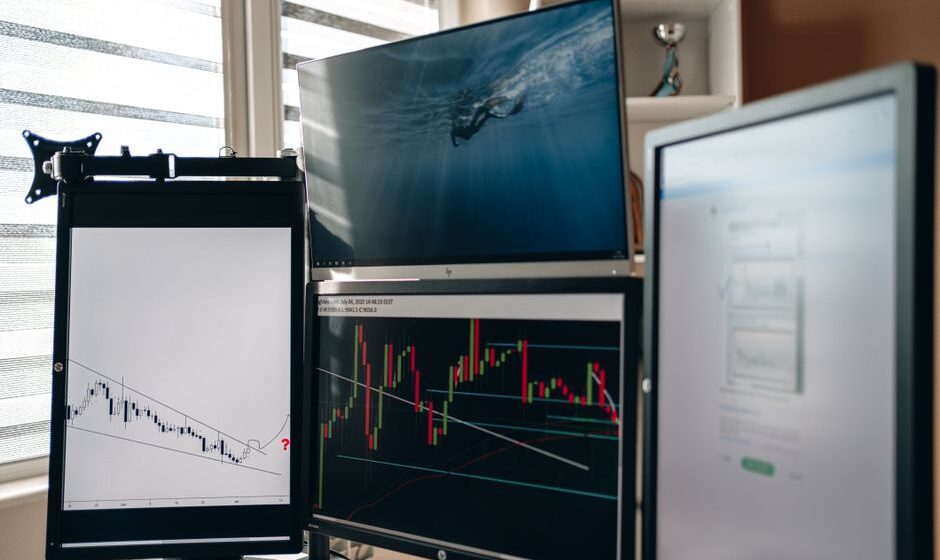

If you’re wondering how to start trading, here’s the short version: learn the basics of how markets work, decide what you want to trade (most beginners start with stocks or ETFs), open an account with a regulated broker, practise with a paper trading (simulated) account, create a written plan with clear rules for risk, and start small with money you can afford to lose. Trading means buying and selling investments over shorter periods to profit from price moves, which is different from long-term investing, where you buy and hold for years. It can be done by anyone with a brokerage account, but it carries real risk, and many beginners lose money.
That warning isn’t meant to scare you off. It’s meant to help you start the right way. This guide explains how to start trading step by step: the different styles, what you can trade, the accounts and tools you need, how to manage risk, and the mistakes that trip up most new traders.
This article is general education, not financial advice. Trading involves significant risk, including the loss of more than you invest in some products.
The Essentials in Brief
- How to start trading: learn the basics, choose a market, open a broker account, practise, then start small.
- Trading is short-term buying and selling; investing is usually long-term.
- Stocks and ETFs are the most common starting point for beginners.
- Paper trading lets you practise with simulated money; many brokers offer it free.
- Risk management, such as limiting how much you can lose on each trade, matters more than finding “winning” picks.
- Rules for day trading changed in 2026 when the SEC approved FINRA’s plan to replace the $25,000 pattern day trader minimum.
How to Start Trading: Trading vs Investing
Before learning how to start trading, it helps to know how it differs from investing.
| Trading | Investing | |
|---|---|---|
| Time horizon | Minutes to months | Years to decades |
| Goal | Profit from short-term price moves | Grow wealth over time |
| Activity | Frequent buying and selling | Buy and hold, occasional rebalancing |
| Main focus | Price charts, momentum, news | Company fundamentals, diversification |
| Risk | Higher, especially with leverage | Lower in diversified long-term portfolios, though still not risk-free |
| Time commitment | Often high | Usually low |
Many people do both: a core long-term investment portfolio, plus a small amount set aside for active trading.
The main trading styles
| Style | Typical holding period | What it involves |
|---|---|---|
| Day trading | Minutes to hours, closed before the market closes | Many trades per day, close focus on price action |
| Swing trading | A few days to a few weeks | Capturing short-term trends or “swings” |
| Position trading | Weeks to months | Following longer trends based on technical or fundamental analysis |
| Scalping | Seconds to minutes | Very frequent trades for small price changes |
Most beginners find swing or position trading easier to fit around a job, because it doesn’t require watching screens all day.
Seven Steps to Your First Trade
The steps below take most beginners from zero knowledge to a first small, carefully planned trade. Take them in order and do not rush, because each step reduces the risk of expensive early mistakes.
Step 1: Learn the basics
You don’t need a finance degree, but you do need to understand some core ideas before you risk money:
- How stock exchanges and brokers work.
- Order types: market orders, limit orders and stop orders.
- Bid and ask prices, and the spread between them.
- What moves prices: earnings, economic news, interest rates and sentiment.
- Basic chart reading: trends, support and resistance, volume.
- Fees and taxes on trading profits.
Free educational material from regulators is a good starting point. The SEC’s Investor.gov and FINRA both publish beginner-friendly guides.
Step 2: Decide what to trade
There are many markets, but they aren’t equally beginner-friendly.
| Market | What you trade | Beginner-friendliness |
|---|---|---|
| Stocks | Shares of individual companies | Good starting point; easy to understand |
| ETFs | Funds tracking indexes, sectors or themes | Good; diversified and widely available |
| Options | Contracts giving the right to buy or sell at a set price | Complex; can lose your whole premium quickly |
| Futures | Contracts to buy or sell an asset at a future date | Complex; uses leverage |
| Forex | Currency pairs, such as EUR/USD | Highly leveraged; fast-moving |
| Crypto | Bitcoin and other digital assets | Very volatile; less regulated in some areas |
When people search “what to trade” as beginners, the most common sensible answer is large, liquid stocks or broad ETFs. They’re easier to understand, cheaper to trade and less likely to make big, sudden moves than leveraged products.
Step 3: Choose a regulated broker
To trade in the US, you need a brokerage account. Look for:
- Regulation and protection. The broker should be a FINRA member, and SIPC membership protects customers if the firm fails (up to limits), though not against trading losses. You can check a broker on FINRA’s BrokerCheck.
- Costs. Many brokers offer commission-free stock and ETF trades, but check other fees and spreads.
- Platform and tools. Charting, research, order types and a mobile app that’s easy to use.
- Paper trading. A practice mode is very useful for beginners.
- Account types. A cash account lets you trade with your own money; a margin account lets you borrow, which increases risk.
Beginners are usually better off starting with a cash account and no margin.
Step 4: Practise with paper trading
Paper trading means trading with simulated money in real market conditions. It’s one of the best ways to learn how to start trading without risking anything.
Is paper trading free? Many brokers offer paper trading free to account holders, and some platforms offer it without an account. Use it to:
- Learn how to place different order types.
- Test a trading strategy over dozens of trades.
- Track your results honestly, including losing trades.
- Get used to the platform before real money is involved.
Remember that paper trading doesn’t capture the emotions of real money, so expect your first live trades to feel different.
Step 5: Write a trading plan
A trading plan is a set of rules you follow every time. It should cover:
- What you trade and when (for example, large-cap US stocks during market hours).
- Your entry rules: what has to happen before you buy.
- Your exit rules: when you’ll take profits and when you’ll cut losses.
- Position size: how much you’ll put into each trade.
- Maximum risk per trade: many traders cap losses at a small percentage of their account on any single trade.
- Daily or weekly loss limits: when you’ll stop trading for the day.
- Record keeping: a journal of every trade and why you took it.
The plan protects you from making emotional decisions in the moment.
Step 6: Start small
When you move to real money, start with a small amount you can genuinely afford to lose. Small positions let you learn without serious damage. Increase size only after you’ve followed your plan consistently for months and your results justify it.
Step 7: Manage risk on every trade
Risk management is the part of how to start trading that most beginners skip, and it’s the part that matters most.
| Risk tool | How it helps |
|---|---|
| Stop-loss orders | Automatically sell if the price falls to a set level, limiting losses (though prices can gap past your stop) |
| Position sizing | Keeps any single loss small relative to your account |
| Diversification | Avoids putting all your money in one trade or sector |
| Avoiding leverage | Prevents losses larger than your capital |
| Loss limits | Stops a bad day from becoming a disaster |
Pattern Day Trader Rule Changes
For years, US brokers applied FINRA’s pattern day trader (PDT) rule, which generally required at least $25,000 in a margin account for anyone making four or more day trades within five business days. In 2026, the SEC approved FINRA’s proposal to replace those requirements with new intraday margin standards (FINRA Regulatory Notice 26-10). Brokers are implementing the change on different timelines, so check your own broker’s current rules before you start day trading. Even without the old minimum, day trading remains one of the riskiest ways to trade.
Can you make money trading stocks?
Some people do, but many don’t, especially in the short term. Trading costs, taxes, emotional mistakes and the difficulty of consistently predicting short-term price moves work against most beginners. Studies of active retail traders have generally found that a large share lose money over time. That’s why it’s sensible to treat early trading as education, keep amounts small and build long-term savings separately.
How to Start Trading: A 30-Day Beginner Checklist
| Week | What to do |
|---|---|
| Week 1 | Read beginner guides from Investor.gov and FINRA; learn order types and how spreads work |
| Week 2 | Open a paper trading account; place practice trades with market and limit orders |
| Week 3 | Write your trading plan, including entry rules, exit rules and a maximum loss per trade |
| Week 4 | Review your paper results honestly; only then consider a small, real-money cash account |
This pace may feel slow, but it’s the safest answer to how to start trading. Rushing into real money before you’ve practised is how many beginners lose their first account.
Errors That Cost New Traders Money
- Trading without a plan or written rules.
- Risking too much on one trade.
- Using margin or leverage too early.
- Chasing hot tips from social media.
- Refusing to take small losses, then suffering big ones.
- Overtrading out of boredom or to “win back” losses.
- Ignoring taxes and fees.
- Quitting a sound long-term investing plan to chase short-term gains.
Tools That Help Beginners
- A trading journal. A spreadsheet is enough: date, ticker, entry, exit, size, reason and result. Review it weekly.
- Watchlists. Keep a short list of stocks or ETFs you understand rather than chasing everything that moves.
- Price alerts. Let your broker notify you when a price reaches a level, so you don’t have to stare at charts.
- An economic calendar. Know when major reports, such as inflation data or central bank decisions, are due, because they can move markets sharply.
Taxes on trading
In the US, profits from selling investments are generally subject to capital gains tax. Gains on positions held one year or less are usually taxed as short-term gains, at ordinary income tax rates, which are often higher than long-term rates. Frequent traders should keep good records and consider talking to a tax professional.
Trading as a career
If you enjoy markets, trading can also be a profession. Banks, hedge funds and proprietary trading firms hire traders, analysts and quants, usually with strong maths and analytical skills. Our guides to quant finance careers and investment banking careers explain what those roles involve.
A Worked Example: A Beginner’s First Three Months
Consider a hypothetical beginner called Lena, whose figures are illustrative only. Lena has steady savings in a separate account and sets aside a small amount she can afford to lose entirely for learning to trade. In her first month, she reads beginner material from her broker and regulators, learns how orders work and opens a paper trading account.
She practises for six weeks, writing down the reason for every simulated trade, where she would exit if wrong and what actually happened. She notices that her worst results come from trades she entered impulsively after reading headlines, so she adds a rule to her plan: no trade without a written reason and an exit point set in advance.
In her third month, Lena opens a cash account with a regulated broker and makes a few small trades in large, well-known stocks, never risking more than a small percentage of her trading money on one position. Some trades lose, some gain, and overall she ends the quarter roughly where she started after costs. That might sound disappointing, but Lena has learned how orders, costs and emotions affect real results, without risking her savings. That is exactly what the first few months should achieve.
Building Good Habits From the Start
The habits you form in your first months often matter more than any particular strategy, because good habits protect you while your knowledge is still growing. Keep a trading journal that records each trade, why you made it, how you felt and what happened. Over time, patterns appear, such as trading more after losses or holding losing positions too long, and you can write rules to correct them.
Set clear limits before you place your first real trade, and write them down where you will see them. Decide how much you will risk on any single trade, how much you can lose in a week or month before stopping to review, and how much time you will spend. Avoid trading money you need for bills, emergencies or long-term goals. Finally, keep learning from reliable sources such as regulators, exchanges and established brokers, and be sceptical of anyone promising quick, guaranteed profits, especially on social media. Many experienced people also keep most of their money in diversified, long-term investments and treat active trading as a small, separate activity. That balance protects your financial goals while you learn, and it removes the pressure to make every trade succeed. Reviewing your journal once a month, calmly and honestly, is one of the most useful habits you can build.
Questions Beginners Ask About Trading
How do I start trading with no experience?
Start by learning the basics from reputable sources, such as your broker’s education centre and official regulator guides. Then open a paper trading account and practise with simulated money until you understand orders, costs and how your emotions affect decisions. When you are ready, open a cash account with a regulated broker, write a simple trading plan with clear risk limits and begin with small amounts you can afford to lose.
How much money do I need to start trading?
Many brokers have no minimum deposit to open a cash account, and fractional shares let you buy small portions of expensive stocks, so you can start with a modest amount. Margin accounts, options and some other products have their own minimums and extra risks, so check your broker’s rules carefully. Whatever the amount, only trade money you can afford to lose, and keep emergency savings and long-term investments separate.
What should I trade as a beginner?
Most beginners start with large, well-known stocks or broad exchange-traded funds, because they are easier to understand, trade in high volumes and usually have lower costs than more complex products. Options, futures, forex and cryptocurrencies involve leverage, complexity or high volatility that can lead to rapid losses. It is sensible to build experience and a proven plan with simpler investments before considering riskier products, if you ever do.
Is paper trading free?
Many brokers offer paper trading free to their customers, letting you practise with simulated money inside the same platform you would use for real trades. Some charting and trading platforms also offer paper trading without opening a funded account. Paper trading is a valuable way to learn how orders work and test a plan, but remember it does not fully reproduce the emotions of risking real money, so start small when you switch.
Can you make a living from trading?
A small number of people do, but most retail traders do not, particularly in the short term. Trading costs, taxes, emotional mistakes and the difficulty of consistently predicting price moves work against most individuals, and studies of active retail traders have generally found that many lose money over time. It is wiser to treat trading as a skill to learn carefully with limited money, while keeping a stable income and long-term savings separate.
Is trading the same as gambling?
Not necessarily, but it can become similar if done without a plan. Disciplined trading uses research, a written plan, risk limits and careful record keeping, aiming to make decisions with a reasoned edge. Trading becomes closer to gambling when people bet large amounts on impulse, chase losses or rely on tips and hype. Clear rules, small position sizes and honest review of results help keep trading on the disciplined side.
Starting Carefully
Learning how to start trading is mostly about preparation and discipline. Understand the basics, choose a simple market, practise with paper trading, write a plan, start small and manage risk on every trade. Treat your first months as an education rather than a way to get rich quickly, and keep your long-term savings separate. That approach won’t guarantee profits, but it will give you a much better chance of learning without costly mistakes.
If you want to understand the bigger picture first, our guides on how the stock market works and what an ETF is explain the basics in plain language. This article is general information, not personal financial advice. Your situation, goals and tolerance for risk are your own, so consider speaking to a qualified, regulated financial adviser before putting significant money into the markets.
Sources: Investor.gov (SEC), day trading; FINRA Regulatory Notice 26-10, intraday margin standards; FINRA BrokerCheck; SIPC, what SIPC protects; IRS, Topic 409 capital gains and losses.