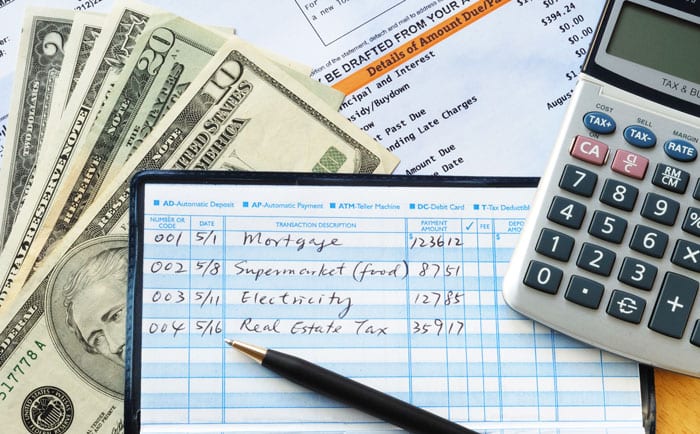
Getting paid every two weeks is common in the United States — nearly 43% of workers are on a biweekly pay schedule. Yet many people still feel like they live paycheck to paycheck, even with a decent income. Why? Because biweekly budgeting requires a different mindset than monthly budgeting.
In this guide, I’ll show you exactly how to budget a biweekly paycheck, share a free template, and give you real examples that work in 2026. No fluff, no complicated spreadsheets — just a system you can start today.
Budgeting your biweekly paycheck gives you control over every dollar.
Why Biweekly Paychecks Feel Harder to Budget
With a monthly paycheck, you pay all bills once a month. Simple. But with biweekly pay, you receive 26 paychecks per year (52 weeks ÷ 2). That means two months each year you get three paychecks instead of two. This irregularity often causes confusion — people either spend too much in “three‑paycheck months” or struggle to cover bills in normal months.
The solution isn’t to switch to monthly pay. It’s to adopt a biweekly budgeting method that works with your cash flow, not against it.
Step 1: Calculate Your True Biweekly Income
Before you budget, know exactly how much lands in your bank account every payday. Do not use your gross salary.
How to find your net biweekly pay:
- Look at your pay stub: “Net pay” (after taxes, 401(k), health insurance).
- If you’re hourly: multiply hours worked in two weeks × hourly rate, then subtract deductions.
- If income varies: average your last 6 paychecks.
Example: Sarah earns $4,200 per month after taxes. But on biweekly pay, each paycheck is roughly $1,938 ($4,200 × 12 ÷ 26). She budgets based on $1,938 per paycheck, not $4,200 per month.
Step 2: List Every Bill & Due Date (Critical!)
Most budgeting fails because people forget annual or semi‑annual bills. Create a complete list:
- Fixed monthly bills: rent/mortgage, car payment, minimum loan payments, subscription services.
- Variable essentials: groceries, gas, utilities, internet, phone.
- Irregular bills: car insurance (every 6 months), property taxes, annual Amazon Prime, doctor copays.
- Saving & debt goals: emergency fund, retirement, extra debt payments.
- Guilt‑free spending: dining out, hobbies, gifts.
Now write each bill’s due date. This is the most important step for biweekly budgeting.
Align your bills with your two paychecks to avoid cash flow gaps.
Step 3: Choose a Biweekly Budget Method
There are two highly effective methods. Choose the one that matches your personality.
Method A: The Two‑Paycheck System (Paycheck‑by‑Paycheck Budget)
You treat each paycheck separately. When you get paid, you assign every dollar to a category that must be paid before your next paycheck.
Example: Paycheck #1 on the 5th covers rent ($1,200), electricity ($80), and groceries ($150). Paycheck #2 on the 19th covers car payment ($350), phone bill ($60), and savings ($200).
Pros: Easy to track, prevents overspending.
Cons: Takes more frequent effort.
Method B: The Monthly Base Budget (Simulate Monthly Pay)
You calculate your average biweekly income and build a monthly budget. Then you live on two paychecks per month. The two “extra” paychecks (the two months where you get three paychecks) go entirely to savings, debt, or big goals.
Pros: Builds forced savings, less frequent tracking.
Cons: Requires discipline not to spend the “extra” money early.
For most people, I recommend Method A (two‑paycheck system) — it aligns with your actual cash flow and prevents the “I’ll pay it later” trap.
Step 4: Apply the 50/30/20 Rule to Biweekly Pay
The Consumer Financial Protection Bureau’s 50/30/20 rule works beautifully for biweekly budgets. You simply split each paycheck:
- 50% Needs: Rent, utilities, groceries, minimum debt payments, transportation.
- 30% Wants: Dining out, subscriptions, hobbies, shopping.
- 20% Savings & Extra Debt: Emergency fund, retirement, investing, extra principal on loans.
Here’s an example using a $2,000 biweekly paycheck (net):
| Category | % of Paycheck | Amount ($2,000) | Examples |
|---|---|---|---|
| Needs | 50% | $1,000 | Rent ($800), groceries ($150), car insurance ($50) |
| Wants | 30% | $600 | Restaurants ($200), Netflix/Hulu ($30), clothing ($100) |
| Savings/Debt | 20% | $400 | Emergency fund ($250), extra debt payment ($150) |
Adjust percentages based on your situation (e.g., high‑cost city may need 60/25/15). The key is to apply the split every payday before you spend anything.
Step 5: Align Bills with Your Paydays (The “Bill Calendar” Trick)
This is the #1 secret to successful biweekly budgeting. Most people get paid on a set day (e.g., every other Friday). Many bills have fixed due dates (1st, 15th, 30th). If your rent is due on the 1st but your next paycheck comes on the 5th, you’ll be short.
Solution: Pay as many bills as possible right after you receive your paycheck.
Example of a biweekly bill calendar:
- Paycheck #1 (1st & 15th of month): Pay rent/mortgage, car insurance, internet, phone, utilities.
- Paycheck #2 (16th–end of month): Pay credit card minimum, student loan, groceries for second half, savings transfer.
If a bill’s due date falls before your paycheck arrives, ask to change the due date. Most utility companies, credit card issuers, and even landlords allow it. A 2026 survey found that 67% of companies will adjust a due date by at least 5 days upon request.
Step 6: Use a Zero‑Based Budget for Biweekly Pay
Zero‑based budgeting means: Income − Expenses = $0. Every dollar has a job — whether it’s bills, savings, or fun money. For biweekly pay, you do this each payday.
How to zero‑budget a $1,800 biweekly paycheck:
| Category | Amount |
|---|---|
| Income (net) | $1,800.00 |
| Rent (half) | −$750.00 |
| Groceries (2 weeks) | −$200.00 |
| Electricity bill | −$80.00 |
| Internet | −$60.00 |
| Gas for car | −$80.00 |
| Savings transfer | −$360.00 |
| Dining out fund | −$120.00 |
| Leftover (should be $0) | $0.00 |
You do this every payday — even for the “extra” paycheck months. When you get that third paycheck in a month, you allocate it entirely to savings, debt, or a big purchase.
Step 7: Automate Your Biweekly Savings
Biweekly budgets fail when savings is an afterthought. Instead, automate a transfer on the same day as your paycheck.
- Open a separate high‑yield savings account (online banks offer 4–5% APY in 2026).
- Set up an automatic transfer of 10–20% of your net pay to move 1–2 days after payday.
- If you use the “extra paycheck” method, set that third paycheck to auto‑transfer 100% to a goal account.
According to the National Endowment for Financial Education, people who automate savings are 3x more likely to reach their goals than those who save manually.
Step 8: Track Your Spending for 2 Pay Cycles
You can’t improve what you don’t measure. For the next two pay periods (4 weeks), write down every single expense. Use a notes app, a small notebook, or a free app like Mint or YNAB.
At the end of two cycles, ask yourself:
- Did I overspend in any “want” category? (Eating out is the #1 budget buster.)
- Were any bills higher than expected? (Utility bills spike in summer/winter.)
- Did I have money left over on payday? If yes, give it a job immediately.
Then adjust your budget categories for the next cycle.
Free Biweekly Budget Template (Printable & Digital)
To make it easy, here’s a simple template you can copy into Google Sheets or print.
Download our free biweekly budget worksheet — print it and fill in your own numbers.
Template columns:
Paycheck #1 Date: _________ Amount: _________
Paycheck #2 Date: _________ Amount: _________
| Category | Paycheck #1 | Paycheck #2 |
|---|---|---|
| Housing (rent/mortgage) | ||
| Utilities (electric, water, gas) | ||
| Groceries | ||
| Transportation | ||
| Insurance | ||
| Debt payments | ||
| Savings | ||
| Wants / Fun money | ||
| Total expenses |
Real‑Life Biweekly Budget Example (Single Person, $48k/year)
Let’s walk through a complete example. Maria earns $48,000 gross per year. After taxes, health insurance, and 401(k) contribution, her net biweekly paycheck is $1,450. She uses the two‑paycheck method.
Paycheck #1 (due on 5th): $1,450
- Rent (half of $1,200) → $600
- Electricity + internet → $120
- Groceries (first two weeks) → $180
- Car insurance (set aside 1/2 of monthly $100) → $50
- Savings → $200 (14% of paycheck)
- Dining out budget → $150
- Remaining for incidentals → $150
Paycheck #2 (due on 19th): $1,450
- Rent (second half) → $600
- Car payment → $220
- Groceries (second two weeks) → $180
- Phone bill → $55
- Savings → $200
- Subscription services → $40
- Remaining for gas & entertainment → $155
Maria also has two “three‑paycheck” months per year. She sends the entire third paycheck ($1,450) directly to her emergency fund. Within 12 months, she saves an extra $2,900.
Common Biweekly Budgeting Mistakes (And How to Fix Them)
Mistake 1: Forgetting about “annual” bills
Car registration, holiday gifts, back‑to‑school expenses — they kill your budget if you don’t plan. Fix: Divide each annual bill by 26 paychecks and set that amount aside every pay period into a separate “sinking fund” account.
Mistake 2: Spending the “extra” paycheck before it arrives
Many people mentally spend the third paycheck on vacations or shopping before they get it. Fix: As soon as you know which months have three paydays (e.g., March and August), label those checks “SAVINGS ONLY” in your calendar.
Mistake 3: Not adjusting for irregular hours
If your income varies, a fixed budget fails. Fix: Build a “lowest possible paycheck” budget. Any extra money in higher paychecks goes directly to a buffer account.
Tools & Apps That Make Biweekly Budgeting Easier (2026)
- YNAB (You Need A Budget): Built for zero‑based budgeting, handles biweekly schedules perfectly.
- EveryDollar: Free version is great for paycheck‑by‑paycheck planning.
- Google Sheets (our free template below): 100% customizable and free.
- Qapital: Automates savings rules (e.g., “save $20 from every paycheck”).
Frequently Asked Questions (FAQ)
How do you budget when you get paid every two weeks?
List all bills and their due dates, then assign each bill to the paycheck that arrives just before the due date. Use a zero‑based budget every payday, and automate savings immediately after each paycheck.
What is the 50/30/20 rule for biweekly pay?
It’s the same as the monthly rule, but applied to each paycheck individually: 50% of that paycheck to needs, 30% to wants, 20% to savings/debt. Adjust percentages based on your actual expenses.
Should I budget monthly or biweekly?
If you are paid biweekly, you should budget biweekly. Monthly budgets ignore cash flow timing — you might think you have money, but it’s already spoken for by next week’s bills. Biweekly budgeting aligns with reality.
How much should I save from each biweekly paycheck?
Aim for at least 15–20%. If you can’t reach that, start with 5% and increase by 1% every two pay cycles. The key is consistency, not the initial amount.
Can I use a zero‑based budget with biweekly pay?
Absolutely. Zero‑based budgeting works at any frequency — just make sure your expenses for the two‑week period equal your net paycheck amount. Every dollar is assigned to a category before you spend it.
What’s the best biweekly budget template?
The best template is one you’ll actually use. Our printable table above or a simple Google Sheet with two columns (Paycheck #1 and Paycheck #2) works great. Many people also love the “budget by paycheck” workbook available free from the CFPB.
Conclusion: Start Your Biweekly Budget Today
Budgeting a biweekly paycheck isn’t harder than monthly budgeting — it’s just different. The key steps are:
- Know your exact net pay per paycheck.
- List all bills with due dates.
- Assign bills to specific paychecks using a calendar.
- Apply a percentage system (like 50/30/20) to each paycheck.
- Automate your savings immediately on payday.
- Review and adjust every two weeks.
Start today — don’t wait for the “perfect” time. Take out a piece of paper or open a spreadsheet, write down your next paycheck amount, and give every dollar a home. In just two pay cycles, you’ll feel more in control than ever before.
Want a free biweekly budget worksheet sent to your inbox? Drop your email below (or check back on freojob.com for the downloadable template).
Disclaimer: This article is for informational purposes only and does not constitute financial advice. Consult a certified financial planner for personalized guidance.