The Ultimate Guide to 2026 National Guard and Reserve Drill Pay: Everything You Need to Know

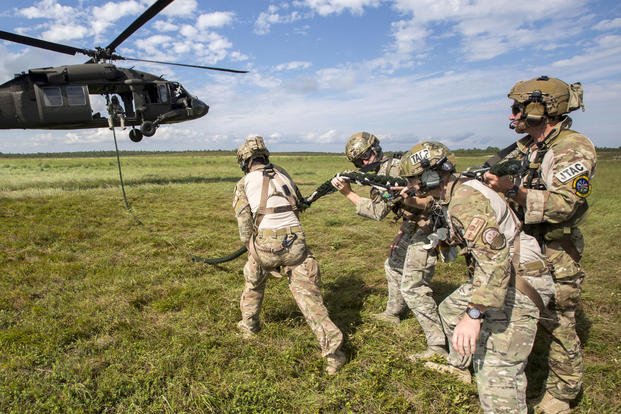
The year 2026 marks a significant milestone for the 1.2 million men and women serving in the Reserve Component. With a 3.8% across-the-board increase in basic pay, the financial landscape for the National Guard and Reserves has shifted. Whether you are a junior enlisted soldier or a seasoned senior officer, understanding how this raise impacts your “weekend” paycheck is vital for your 2026 financial planning.
In this comprehensive guide, we’ll break down the new 2026 drill pay charts, explain the “1/30th Rule,” and look at how these raises compound over a full year of service.
1. The 2026 Military Pay Raise: By the Numbers
Effective January 1, 2026, the Department of Defense implemented a 3.8% increase in basic pay. This raise is designed to help military compensation keep pace with private-sector wage growth and inflation.
For the Reserve Component (National Guard, Army Reserve, Navy Reserve, Marine Corps Reserve, Air Force Reserve, and Coast Guard Reserve), this basic pay increase translates directly into Drill Pay.
What is a “Drill Period”?
To understand the charts below, you must understand the math:
- 1 Drill Period: Equals 1/30th of your monthly active-duty base pay.
- 1 MUTA (Multiple Unit Training Assembly): Typically refers to a single 4-hour block of training.
- Standard Weekend: Usually a “MUTA 4,” meaning four 4-hour blocks (two on Saturday, two on Sunday).
2. 2026 Drill Pay Charts: Officers & Warrant Officers
Officer pay scales are heavily influenced by “Years of Service.” In 2026, a Captain (O-3) with over 4 years of service sees a noticeable jump in their weekend earnings.
Officer & Warrant Officer (0-10 Years Service)
Rates reflect a standard 4-drill weekend (MUTA 4).
| Pay Grade | Under 2 Years | 4 Years | 8 Years | 10 Years |
| O-4 (Major) | $839.29 | $1,050.79 | $1,175.51 | $1,255.98 |
| O-3 (Captain) | $737.89 | $984.36 | $1,083.38 | $1,116.76 |
| O-2 (1st Lt) | $637.58 | $864.61 | $882.34 | $882.34 |
| W-2 (CW2) | $616.24 | $704.80 | $806.82 | $837.67 |
The “O-E” Factor: Prior Enlisted Officers
If you served at least 4 years and 1 day of active duty (or equivalent points) before commissioning, you qualify for the O-1E, O-2E, or O-3E pay scales. This is a massive retention incentive. For example, an O-3E with 10 years of service earns $1,116.76 per weekend, reflecting their prior experience.
3. 2026 Drill Pay Charts: Enlisted Members
The backbone of the Guard and Reserve, enlisted members see a direct correlation between their “time in grade” and their monthly weekend income.
Enlisted Pay (0-10 Years Service)
Rates reflect a standard 4-drill weekend (MUTA 4).
| Pay Grade | Under 2 Years | 4 Years | 8 Years | 10 Years |
| E-7 (SFC/MSgt) | $524.27 | $623.09 | $684.75 | $706.71 |
| E-6 (SSG/TSgt) | $453.48 | $542.50 | $615.04 | $634.59 |
| E-5 (SGT/SSgt) | $445.72 | $526.22 | $573.31 | $586.05 |
| E-4 (SPC/SrA) | $418.98 | $487.82 | $508.70 | $508.70 |
4. Beyond the Weekend: Annual Training and Allowances
While drill pay covers your monthly weekends, Annual Training (AT) is where the math changes. When you are on orders for more than 30 days, or during your two-week AT, you transition to the Full Monthly Pay Scale.
BAH and BAS in 2026
It is important to remember that drill pay is Basic Pay only. You do not receive BAH (Basic Allowance for Housing) or BAS (Basic Allowance for Subsistence) for a standard two-day drill weekend. However, during AT or when activated (Title 10 or Title 32 orders), these tax-free allowances are added to your check.
- BAH Calculator: Check the updated 2026 rates on the Official Defense Travel Management Site.
- BAS Rates: The 2026 BAS rates also increased to help cover rising food costs for service members.
5. Strategic Benefits of Reserve Service in 2026
In 2026, the value of service goes beyond the paycheck. The “total compensation package” for a Reservist includes:
- Tricare Reserve Select (TRS): Continues to be one of the most affordable health insurance options for families in the U.S.
- Retirement Points: Every drill weekend earned (4 points) moves you closer to a “Good Year” for retirement.
- Education Benefits: Access to the Post-9/11 GI Bill and Tuition Assistance (TA) remains a top reason for enlistment.
- Tax Advantages: Remember that your drill pay is taxable, but allowances like BAH (received during AT) are not.
6. How to Read Your 2026 LES (Leave and Earnings Statement)
Your LES is the most important document in your military career. When the 2026 raise hits, you should verify:
- Entitlements: Ensure the “Basic Pay” line matches the 1/30th rate for your rank/longevity.
- Deductions: Check for SGLI (Servicemembers’ Group Life Insurance) and dental premiums.
- Drill Performance: Ensure your unit clerk has submitted all four drill periods for the weekend.
7. Looking Toward 2027: Future Pay Projections
While 2026 brought a 3.8% raise, the 2027 Military Pay Projections are already being debated in Congress. The goal remains to keep military pay competitive with the ECI (Employment Cost Index).
Summary and Conclusion
Serving in the National Guard or Reserves in 2026 is more financially rewarding than ever. With a Captain making over $1,000 and a Staff Sergeant clearing over $600 for a single weekend of work, the Reserve Component remains a viable path for those looking to serve their country while maintaining a civilian career.
Key Takeaways for 2026:
- Pay Raise: 3.8% effective Jan 1, 2026.
- Check Your Rank: Longevity (years of service) is the biggest factor in pay growth.
- Audit Your LES: Ensure your January check reflects the new rates.